Negative scope mismatches in coordination
Project Overview
This project analyzes how coordination and negation interact in terms of scope, focusing on “negative coordination,” where a negating element precedes a conjoined or disjoined phrase and interacts with the coordinator. The central goal is to identify the source of scope mismatches between negation and coordinators in different coordination structures. Any adequate analysis must integrate multiple interacting components, thereby engaging with the Negation Paradox.
Research Questions & Theoretical Framework
This project asks whether these mismatches stem from negation (Neg-Plus), from the coordinator (Neg-Only), or from their interaction. In doing so, it directly address the main research question of Area B of the CRS: QB How can we explain similarities and interactions between negation and other grammatical categories?. Concretely, the project addresses: (i) What causes apparent scope mismatches in negative coordination? (ii) How do languages vary with respect to these patterns? (iii) To what extent are these mismatches (anti-)licensed by stress, focus, or other grammatical factors? The research also investigates Gapping sentences where negation in the first conjunct may or may not take scope over the second conjunct (Repp 2009) and ask whether these interpretive options, within individual languages and cross-linguistically, pattern with the scope mismatches found in the first part of the project. Third, it consider coordinated sentences without ellipsis, in which negation in the first conjunct can nevertheless take scope over the second conjunct, suggesting that the principles Repp (2009) proposes for Gapping may extend beyond elliptical contexts.
Methodologies & Data
First, the project revisits the data from Szabolcsi & Haddican (2004), who examine cases where negation c-commands a coordinated DP and show that languages differ in the scope of the coordinator (conjunction vs. disjunction). In some languages, the coordinator can outscope negation, apparently violating De Morgan’s laws. The study expands its sample to include additional European intonation languages and West African tone languages, aiming to reassess existing theoretical accounts from a broader typological perspective. In further research phases, the project will also explore related constructions (e.g., neither … nor) and further broaden the typological sample.
Publications
2026
Zeijlstra, Hedde
Cambridge Handbook of Natural Language Modality Book Chapter Forthcoming
In: Arregui, A.; Hacquard, V.; Ippolito, M. (Ed.): Chapter Modals, negation, concord, and polarity, Cambridge: Cambridge University Press, Forthcoming.
@inbook{nokey,

title = {Cambridge Handbook of Natural Language Modality},

author = {Hedde Zeijlstra },

editor = {A. Arregui and V. Hacquard and M. Ippolito},

url = {https://www.heddezeijlstra.org/_files/ugd/533bc0_7958170efc6748cfa464a628759cc391.pdf},

year  = {2026},

date = {2026-07-01},

publisher = {Cambridge: Cambridge University Press},

chapter = {Modals, negation, concord, and polarity},

keywords = {},

pubstate = {forthcoming},

tppubtype = {inbook}

}
Zeijlstra, Hedde
Semantik und Pragmatik (WSK 10) Book Chapter
In: Gutzmann, D.; Turgay, K.; Zimmermann, T. E. (Ed.): Chapter Abwärts implizierend, De Gruyter Brill, 2026.
@inbook{nokey,

title = {Semantik und Pragmatik (WSK 10)},

author = {Hedde Zeijlstra},

editor = {D. Gutzmann and K. Turgay and T. E. Zimmermann },

year  = {2026},

date = {2026-07-01},

publisher = {De Gruyter Brill},

chapter = {Abw\"{a}rts implizierend},

keywords = {},

pubstate = {published},

tppubtype = {inbook}

}
Zeijlstra, Hedde
Semantik und Pragmatik (WSK 10) Book Chapter
In: Gutzmann, D.; Turgay, K.; Zimmermann, T. E. (Ed.): Chapter Negation, De Gruyter Brill, 2026.
@inbook{nokey,

title = {Semantik und Pragmatik (WSK 10)},

author = {Hedde Zeijlstra},

editor = {D. Gutzmann and K. Turgay and T. E. Zimmermann },

url = {https://www.sprachsystem.ruhr-uni-bochum.de/gls/projekte/wsk-semantik-pragmatik.html.de},

year  = {2026},

date = {2026-07-01},

publisher = {De Gruyter Brill},

chapter = {Negation},

keywords = {},

pubstate = {published},

tppubtype = {inbook}

}
Kati, L.; Sabinasz, D.; Schöner, G.; Kaup, B.
Interaction of polarity and truth value - A neural dynamic architecture of negation processing Conference
46th Annual Conference of the Cognitive Science Society 2026.
@conference{nokey,

title = {Interaction of polarity and truth value - A neural dynamic architecture of negation processing},

author = {L. Kati and D. Sabinasz and G. Sch\"{o}ner and B. Kaup },

editor = {L. K. Samuelson and S. L. Frank and M. Toneva and A. Mackey and E. Hazeltine },

year  = {2026},

date = {2026-07-01},

pages = {1442\textendash1448},

organization = {46th Annual Conference of the Cognitive Science Society},

keywords = {},

pubstate = {published},

tppubtype = {conference}

}
2025
Zeijlstra, Hedde
[No title] Journal Article
In: A Festschrift in Honour of Regine Eckardt, pp. 228–240, 2025.
@article{nokey,

title = {[No title]},

author = {Hedde Zeijlstra},

editor = {E. Csipak and J. David and M. Liu},

doi = {https://doi.org/10.18452/33392},

year  = {2025},

date = {2025-00-00},

journal = {A Festschrift in Honour of Regine Eckardt},

pages = {228\textendash240},

keywords = {},

pubstate = {published},

tppubtype = {article}

}
2024
Zeijlstra, Hedde
Two Varieties of Korean: Rightward Head Movement or Polarity Sensitivity? Journal Article
In: vol. 55, no. 3, pp. 622–641, 2024, ISSN: 1530-9150.
@article{Zeijlstra2024,

title = {Two Varieties of Korean: Rightward Head Movement or Polarity Sensitivity?},

author = {Hedde Zeijlstra},

doi = {10.1162/ling_a_00471},

issn = {1530-9150},

year  = {2024},

date = {2024-07-11},

urldate = {2024-07-11},

volume = {55},

number = {3},

pages = {622--641},

publisher = {MIT Press},

abstract = {\<jats:p\>A strong argument in favor of the existence of rightward, string-adjacent head movement comes from Han, Lidz, and Musolino (2007). They argue that Korean language-internal variation with respect to the scopal order between negation and universal quantifier objects shows that in the variety where negation takes wide scope, the negative marker must have moved along with the verb/auxiliary to the head of IP. This would then constitute evidence for rightward, string-adjacent head movement. In this article, I argue that this analysis actually makes different predictions than have been attested in Korean. Moreover, I argue that, following a well-known stand with respect to the nature of polarity sensitivity (Chierchia 2013), these facts follow naturally once it is assumed that in one variety, but not the other, universal quantifiers are positive polarity items. This makes the attested language-internal variation in Korean less exceptional since language-internal variation with respect to polarity sensitivity is widely attested.\</jats:p\>},

keywords = {},

pubstate = {published},

tppubtype = {article}

}
Koeneman, O.; Do-support, H. Zeijlstra; K. Szendroi & R. Truswell (Eds.) In M. Lekakou, Generation Flex: Flexible syntax 25 years on.
Do-support and the syntax of finiteness Conference
Generation Flex: Flexible syntax 25 years on 2024.
@conference{nokey,

title = {Do-support and the syntax of finiteness},

author = {O. Koeneman and H. Zeijlstra Do-support and the syntax of finiteness. In M. Lekakou, K. Szendroi \& R. Truswell (Eds.), Generation Flex: Flexible syntax 25 years on.},

editor = {M. Lekakou and K. Szendroi and R. Truswell },

url = {https://www.heddezeijlstra.org/_files/ugd/533bc0_0968ebfcb48c43ad89dd69e7ee34f000.pdf},

year  = {2024},

date = {2024-00-00},

organization = {Generation Flex: Flexible syntax 25 years on},

keywords = {},

pubstate = {published},

tppubtype = {conference}

}
0000
Bharadwaj, P.; Sementsova, A.; Hartmann, K.; Zeijlstra, H.
Semantik & Pragmatik WSK Book Chapter Forthcoming
In: Gutzmann, D.; Turgay, K.; Zimmermann, T. E. (Ed.): Chapter When they go high, we go low., Forthcoming.
@inbook{nokey,

title = {Semantik \& Pragmatik WSK},

author = {P. Bharadwaj and A. Sementsova and K. Hartmann and H. Zeijlstra},

editor = {D. Gutzmann and K. Turgay and T. E. Zimmermann},

url = {https://www.sprachsystem.ruhr-uni-bochum.de/gls/projekte/wsk-semantik-pragmatik.html.en},

chapter = {When they go high, we go low.},

keywords = {},

pubstate = {forthcoming},

tppubtype = {inbook}

}
Project Leaders

Prof. Katharina Hartmann
Department of Linguistics, GU Frankfurt
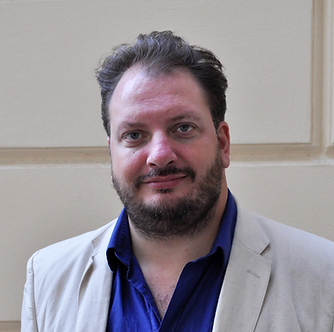
Prof. Hedde Zeijlstra
Seminar for English Philology, Univ. of Göttingen


Student assistants
Dominik Prochota